U.S. Air Force Leverages Missionforce to Modernize Sustainment and Operations for $13.5 Billion Vehicle Fleet

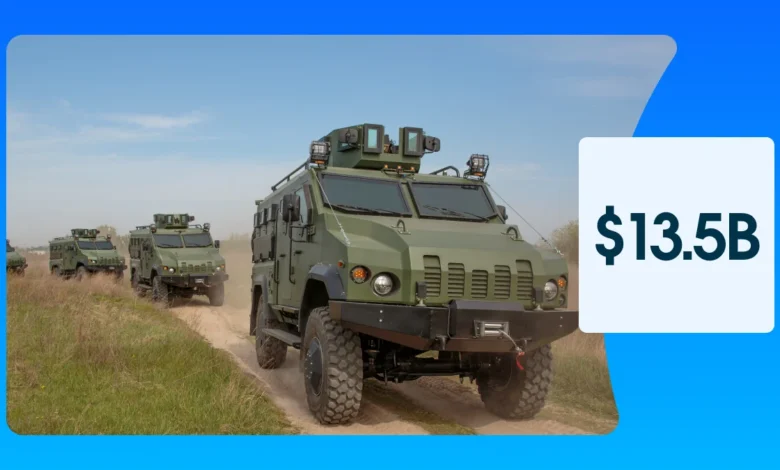
SAN FRANCISCO and WASHINGTON D.C. – July 8, 2026 – The United States Air Force 441st Vehicle Support Chain Operations Squadron (VSCOS) has officially transitioned its extensive global vehicle fleet management to Missionforce National Security, a unified, interoperable platform developed by Salesforce (NYSE: CRM). This strategic move replaces disparate legacy Enterprise Resource Planning (ERP) systems, streamlining logistics, significantly reducing potential downtime, and bolstering the operational readiness of the Air Force’s global fleet, which comprises over 84,000 vehicles valued at an estimated $13.5 billion across nearly 389 locations worldwide. The announcement underscores Missionforce National Security’s accelerating momentum within the Department of War (DoW) and wider U.S. government sector, building upon recent significant contract awards, including a new $72 million Air Force Enterprise License Agreement (ELA) and a substantial $5.6 billion Army Indefinite Delivery/Indefinite Quantity (IDIQ) contract aimed at scaling innovation across the U.S. Armed Forces.
The Imperative for Digital Transformation in Military Logistics
The 441st VSCOS, an 85-person squadron, bears the critical responsibility of managing and ensuring the mission readiness of the Air Force’s diverse vehicle fleet, which includes everything from specialized ground support equipment and tactical vehicles to administrative transport and emergency response assets. For years, like many large government organizations, the squadron contended with a complex web of outdated, fragmented legacy systems. These siloed ERP solutions, often bespoke and difficult to integrate, created significant operational inefficiencies, hampered real-time data visibility, and posed substantial challenges in maintaining a unified, accurate picture of the fleet’s status, location, and maintenance needs.
The impending sunsetting of their primary legacy fleet management system presented a pivotal moment for VSCOS. The squadron recognized the urgent need for a scalable, secure, and resilient platform capable of overseeing such a vast and critical asset portfolio, supporting over 7,300 personnel globally, all without incurring mission-critical downtime. The decision to migrate was not merely about replacing old software; it was a strategic imperative to modernize core logistical capabilities, enhance data-driven decision-making, and future-proof their operations against evolving global demands and technological advancements. The Air Force’s commitment to maintaining its global presence and rapid response capabilities hinges on the reliability and availability of its ground transportation assets, making this digital transformation a cornerstone of its logistical strategy.
Missionforce National Security: A Unified Digital Backbone for the Air Force
Salesforce’s Missionforce National Security, purpose-built for the rigorous demands of national security environments, provided the solution. The platform offers an IL5-authorized (Impact Level 5) environment, crucial for handling controlled unclassified information (CUI) and other sensitive data, thus meeting the stringent security requirements of the Department of Defense. This authorization was a non-negotiable prerequisite, ensuring that the Air Force could migrate its sensitive fleet data with confidence, adhering to federal regulations and cybersecurity protocols.
Through Missionforce National Security, VSCOS has deployed a comprehensive suite of IL5-approved, mission-ready applications leveraging the robust capabilities of Salesforce Government Cloud Plus Defense. This unified digital backbone transforms complex global logistics into streamlined, manageable workflows, providing a single source of truth for all fleet-related information. The system integrates various aspects of vehicle management, from procurement and allocation to maintenance scheduling, supply chain management for parts, and end-of-life disposal.
Key applications and functionalities now in use include:
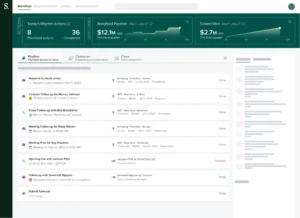
- Centralized Fleet Management: A unified dashboard providing real-time visibility into the status, location, and operational readiness of all 84,000+ vehicles across 389 global sites. This replaces the arduous task of consolidating data from disparate systems, offering commanders an immediate, accurate overview.
- Predictive Maintenance Scheduling: Leveraging data analytics to anticipate maintenance needs based on vehicle usage, age, and historical performance, moving from reactive repairs to proactive servicing. This minimizes unexpected breakdowns and optimizes vehicle uptime.
- Supply Chain Optimization for Parts: Streamlining the ordering, tracking, and distribution of spare parts, reducing lead times and ensuring critical components are available when and where needed. This is particularly vital for maintaining vehicles in remote or deployed locations.
- Personnel Management Integration: Connecting vehicle assets with the personnel responsible for their operation and maintenance, facilitating training records, certification tracking, and resource allocation.
- Compliance and Reporting: Automated generation of regulatory compliance reports, ensuring adherence to Air Force directives and federal guidelines, significantly reducing administrative burden and potential for human error.
- Mobile Accessibility: Enabling field personnel to update vehicle status, submit maintenance requests, and access critical information from any location, improving situational awareness and response times.
Tangible Benefits and Operational Impact
The migration to Missionforce National Security has yielded immediate and measurable benefits for the Air Force, significantly enhancing its ability to support global mission needs. The squadron now possesses a real-time mission view with enterprise-level management and distribution capabilities, driving speed, data accuracy, and mission readiness.
Specifically, Missionforce National Security has empowered VSCOS to:
- Achieve Unprecedented Fleet Visibility: Commanders and logistics officers now have a comprehensive, real-time overview of the entire global fleet, allowing for more informed decision-making regarding asset deployment, utilization, and maintenance priorities. This eliminates blind spots and improves strategic planning.
- Reduce Vehicle Downtime and Increase Availability: By proactively identifying maintenance needs and streamlining the supply chain for parts, the time vehicles spend out of service for repairs is drastically cut. This directly translates to more vehicles being mission-ready at any given moment.
- Streamline Logistical Workflows: Automated processes replace manual, paper-based, or spreadsheet-driven tasks, leading to greater efficiency, reduced administrative overhead, and fewer errors across the entire logistics chain.
- Enhance Data Accuracy and Reliability: A single, unified data foundation eliminates discrepancies often found across siloed systems, ensuring that all decisions are based on the most accurate and up-to-date information available.
- Improve Operational Agility: The ability to rapidly assess fleet status and reallocate resources allows the Air Force to respond more quickly and effectively to dynamic operational requirements, whether for humanitarian aid missions or combat support.
- Optimize Resource Allocation: Better data and visibility enable more efficient allocation of vehicles, personnel, and budget, ensuring that resources are deployed where they can have the greatest impact.
Kendall Collins, CEO of Missionforce and Government Cloud at Salesforce, highlighted the impact: “The 441st VSCOS is a masterclass in how a lean, mission-focused team paired with Salesforce can drive real global impact. By consolidating onto a single, interoperable platform with Missionforce National Security, the Air Force has turned fragmented logistics operations into a strategic advantage. This is delivering improved visibility for commanders, reduced service downtime, and helping ensure vehicles are ready to roll when the call comes.”
Paving the Way for AI Integration and Future Capabilities
Beyond immediate operational improvements, the migration to Salesforce has established a clean, unified data foundation, strategically positioning VSCOS for future artificial intelligence (AI) integrations. The squadron is not merely digitizing existing processes but preparing its entire data ecosystem to leverage advanced analytics and machine learning. This forward-thinking approach is critical for maintaining a technological edge in an increasingly data-driven operational environment.
VSCOS is already actively exploring several AI use cases, including:
- Automating Manual Data Entry: AI-powered tools can significantly reduce the burden of manual data input into systems of record, freeing up personnel for more complex tasks and minimizing human error.
- Validating Vehicle Identification Numbers (VINs): AI algorithms can quickly and accurately validate VINs against various databases, ensuring data integrity and preventing fraudulent or erroneous entries.
- Predictive Maintenance through Sensor Data Analysis: By integrating and analyzing real-time vehicle sensor data (e.g., engine performance, tire pressure, fluid levels), AI can predict potential maintenance needs before they become critical issues, further enhancing proactive maintenance strategies. This could extend vehicle lifespan and significantly reduce unscheduled downtime.
- Optimized Route Planning: AI can analyze traffic patterns, weather conditions, and vehicle availability to suggest the most efficient routes for deployment and supply runs, saving fuel and time.
Bill Pessin, SVP of National Security at Salesforce, emphasized the strategic foresight behind this collaboration: “We made a strategic bet on the future of national security by aligning the right people, processes, and technology to scale with the DoW and the Intelligence Community. This work with the USAF is a culmination of that foresight, delivering the digital superiority and multi-tenant scale required to meet operational demands. With a unified view, our customers can perform critical national security tasks with the visibility, coordination, and operational control needed to move at mission speed – helping to ensure our warfighters and intelligence officers maintain decision advantage.”
Salesforce’s Expanding Footprint in Defense Modernization
This latest achievement with the Air Force’s 441st VSCOS is a testament to Salesforce’s growing strategic importance within the U.S. Department of Defense and the broader government sector. The company’s Missionforce offering, specifically tailored for public sector organizations, is designed to modernize service delivery and mission-critical operations by delivering trusted cloud, data, and AI capabilities that support secure, resilient operations and measurable outcomes.
Salesforce’s commitment to the DoD is evident in its substantial investments in security, compliance, and dedicated solutions like Government Cloud Plus Defense and Missionforce National Security. These offerings are purpose-built to deliver Salesforce innovation to the tactical edge, operating in environments where readiness, resilience, and speed are paramount. The company’s strategy involves integrating commercial off-the-shelf (COTS) technologies with defense-specific requirements, allowing military branches to leverage cutting-edge commercial innovation while meeting stringent security and operational standards.
The recent $72 million Air Force ELA and the impressive $5.6 billion Army IDIQ contracts signal a clear trend: the U.S. Armed Forces are increasingly turning to proven commercial cloud platforms to accelerate their digital transformation initiatives. These large-scale agreements indicate a strategic shift away from custom-built, proprietary systems towards more agile, scalable, and interoperable commercial solutions that can be rapidly deployed and updated. This approach not only reduces development costs and timelines but also ensures that the military can continuously adopt the latest technological advancements.
Broader Implications for National Security and Defense Logistics
The successful implementation at VSCOS has far-reaching implications for national security and the future of defense logistics. It serves as a powerful case study for how other military branches and government agencies can effectively modernize their operations, even for highly complex and geographically dispersed assets.
- Enhanced Global Reach and Responsiveness: By optimizing the logistical backbone for vehicle fleets, the Air Force can project power and provide support more effectively across its global commitments. Faster vehicle readiness means faster response times for critical missions.
- Cost Efficiency and Resource Optimization: While the initial investment in modern ERP solutions can be significant, the long-term benefits include reduced operational costs through predictive maintenance, optimized fuel consumption (via better route planning), reduced administrative overhead, and more efficient asset utilization.
- Interoperability and Joint Operations: As more DoD entities adopt unified platforms like Missionforce, the potential for greater interoperability between services increases. A common data foundation can facilitate seamless coordination during joint operations, improving overall mission effectiveness.
- Talent Attraction and Retention: Modern, user-friendly systems can improve the daily work experience for military personnel, potentially aiding in talent attraction and retention by providing tools that are intuitive and reflective of contemporary technology standards.
- Foundational for Future Warfare: The integration of AI into logistics is not just about efficiency; it’s about building the foundational capabilities for future warfare, where data-driven decision-making, autonomous systems, and predictive analytics will play a crucial role in maintaining a decisive advantage.
The Air Force’s adoption of Missionforce National Security represents a significant stride in its ongoing digital modernization journey. It exemplifies a broader strategic pivot within the Department of Defense towards leveraging advanced commercial cloud technologies to enhance operational readiness, improve logistical efficiency, and secure a data-driven future for the U.S. Armed Forces. As global challenges continue to evolve, the ability to manage critical assets with unparalleled precision and agility will be paramount to national security.
About Missionforce
As public sector organizations navigate unprecedented digital acceleration, Salesforce is meeting the moment with Missionforce. Missionforce modernizes service delivery and mission-critical operations across government by delivering trusted cloud, data, and AI capabilities designed to support secure, resilient operations and measurable outcomes. Missionforce National Security is purpose-built to deliver the best Salesforce innovation to the tactical edge and environments where readiness, resilience, and speed are essential.
This article may include references to services or features that are still in development and are unreleased. Customers should make their purchase decision based on fully released and available features.
Related posts: