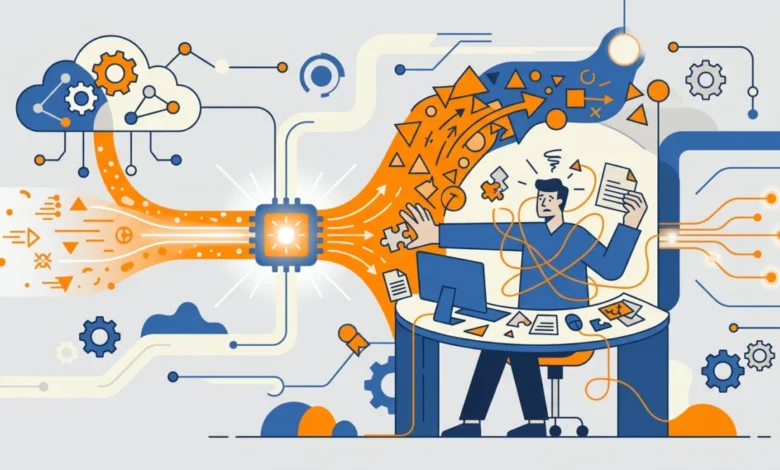
The rapid integration of artificial intelligence into professional workflows has shifted the nature of workplace productivity from manual labor to high-level orchestration. As of September 2026, data from organizational efficiency analysts suggests that while AI has successfully automated the "execution" phase of project management, it has simultaneously created a new, critical bottleneck: the human capacity for definition and oversight. This shift is increasingly being characterized by the "10-10-80" framework, a model that categorizes modern work into strategic definition, AI-driven execution, and human-led review.
The Evolution of the Productivity Paradigm
Historically, productivity was measured by an individual’s ability to perform tasks—writing code, drafting legal documents, or conducting research. With the advent of generative AI, the cost and time required to complete these tasks have plummeted. However, this has not resulted in a proportional decrease in total human workload. Instead, it has triggered an economic phenomenon known as the Jevons Paradox, where increased efficiency in a resource (in this case, task execution) leads to an increased total consumption of that resource.
As AI reduces the barrier to entry for complex projects, organizations are initiating more projects than ever before. This expansion of scope means that while an individual may no longer be responsible for the "middle 80%" of a project—the heavy lifting of execution—they are now responsible for the oversight of ten times as many tasks. The constraint has migrated from the production of work to the approval of it.
The 10-10-80 Framework Explained
The 10-10-80 rule offers a structural breakdown of how modern professionals should allocate their cognitive energy:
- The Initial 10% (Definition): This phase encompasses vision, strategy, and the setting of rigid constraints. If a professional fails to provide clear, high-quality inputs during this stage, the AI’s execution will inevitably lack coherence.
- The Middle 80% (Execution): This is the domain of artificial intelligence. It involves breaking down large goals into manageable tasks and performing the actual labor.
- The Final 10% (Review): This is the critical stage of approval, refinement, and shipping. This stage is currently where the most significant professional bottlenecks occur.
Industry experts observe that many professionals attempt to skip the initial 10% under the assumption that AI can "figure it out." This leads to a feedback loop of poor outputs that require significant rework, thereby ballooning the final 10% into a disproportionate drain on time.
Identifying Constraints via Theory of Constraints
The challenges currently faced in AI-augmented workflows were anticipated decades ago by Eli Goldratt, the author of The Goal and the originator of the Theory of Constraints (TOC). Goldratt posited that in any complex system, there is always one bottleneck that limits the throughput of the entire operation.
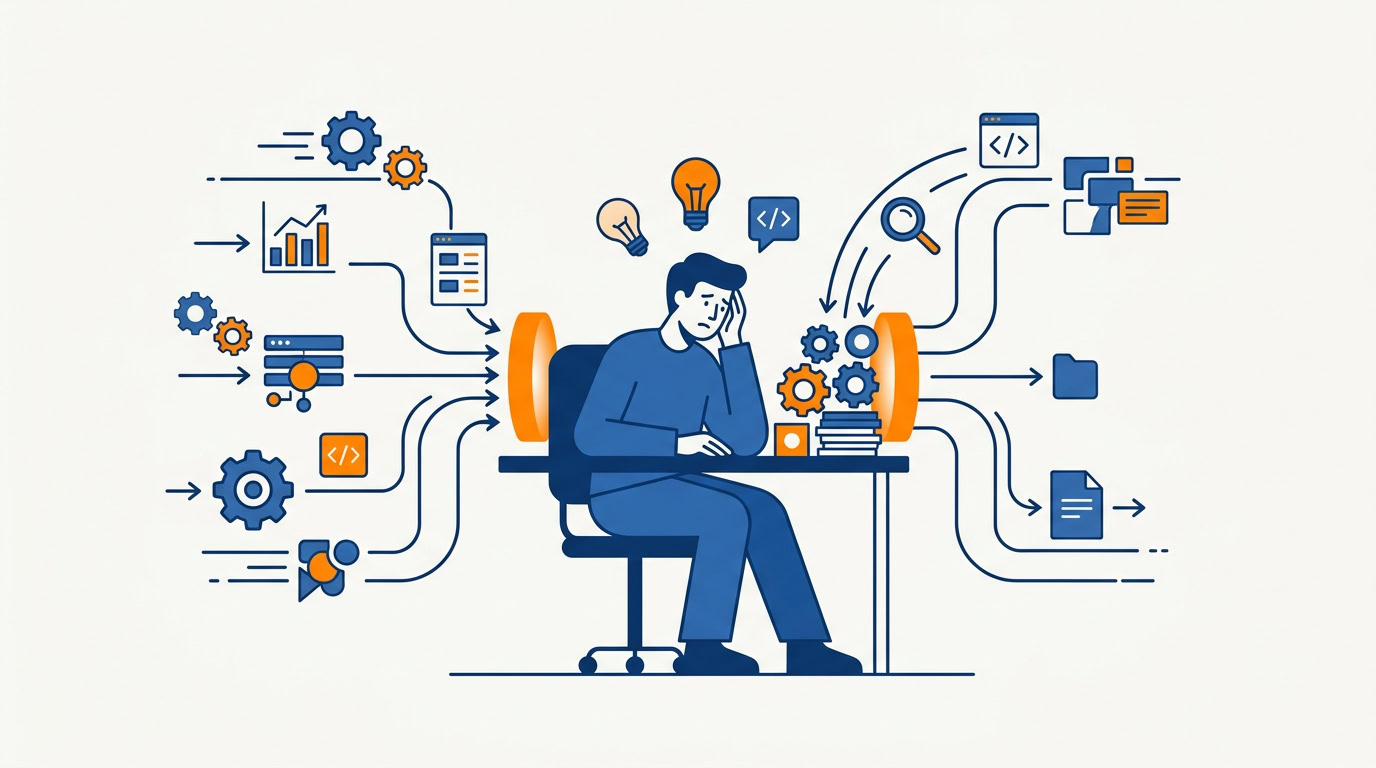
In a modern digital office, this bottleneck is rarely the lack of raw computational power or the inability to generate content. Rather, it is the lack of "human review capacity." When an executive is overwhelmed, it is usually because they have failed to identify which of the three stages—definition, execution, or review—is causing the system to stall. If a professional is buried in the middle 80%, they are likely suffering from a lack of clarity in their initial definitions. If they are buried in the final 10%, they have reached the limit of their oversight capacity.
Structural Methodologies: WBS vs. Tackling and Blocking
To manage this shift in responsibilities, project managers are increasingly returning to established methodologies like the Work Breakdown Structure (WBS). Originally developed by the U.S. Department of Defense in the 1950s, WBS provides a hierarchical tree structure that decomposes a project into smaller, more manageable work packages.
When applied to personal productivity, the WBS approach functions as follows:
- Define the Goal: State the objective clearly.
- Establish Phases: Break the goal into major deliverables.
- Identify Sub-tasks: Detail the components of each phase.
- Create Work Packages: Assign specific, atomic actions to each sub-task.
However, some professionals find the WBS too rigid for dynamic environments. For those struggling with analysis paralysis, "tackling and blocking" serves as a more agile alternative. This involves defining a minimal viable vision and focusing exclusively on the next immediate action required to unblock the project. This iterative approach allows for momentum while avoiding the perfectionism that often plagues the planning phase.
The "Obviousness" Trap
A recurring psychological barrier in the age of AI is the "obviousness trap." When an AI generates a structured plan, the output often seems simple or even trivial. Users frequently dismiss this structure because it lacks the "weight" of a manually created plan. This is a cognitive error; the value of a plan lies not in the difficulty of its creation, but in the clarity of the resulting roadmap. Professionals who recognize that AI can handle the friction of "starting from zero" are significantly more productive than those who attempt to manually draft every structural component of a project.
Leading vs. Lagging Indicators
A common failure in managing AI-driven teams is the focus on lagging indicators—metrics that measure outcomes that have already occurred, such as sales figures or project completion dates. These are historical markers and cannot be changed in the moment.
To influence these outcomes, professionals must pivot to leading indicators—predictive metrics that can be controlled on a daily basis. For example, rather than focusing on a quarterly revenue target (a lagging indicator), an effective workflow focuses on the number of substantive client interactions or specific strategic reviews performed daily (leading indicators). By shifting energy toward these actionable metrics, individuals can exert more direct control over the ultimate trajectory of their projects.
Technological Considerations for Workflow Integrity
As workflows become more automated, the demand for high-quality documentation and data capture has increased. Traditional meeting assistants often participate in calls as "bots," which can alter the social dynamics of 1:1 coaching or sensitive client negotiations. Newer technologies, such as local audio transcription tools (e.g., Granola), have emerged to address this by capturing data without the presence of a third-party virtual participant.
This is indicative of a broader trend: the tools we use to manage our oversight must be as frictionless as the AI that executes our work. If a tool introduces social friction or cognitive load, it effectively becomes another constraint that negates the efficiency gains provided by the AI itself.
Strategic Implications for the Future of Work
The evidence suggests that the future of work is not about doing more, but about directing more. The professional of the late 2020s will function less like a craftsman and more like an editor-in-chief. This transition requires a fundamental change in how we perceive professional value.
The most successful individuals will be those who:
- Audit their current projects to distinguish between definition (first 10%) and execution (middle 80%).
- Acknowledge their own role as the bottleneck and implement systems to increase their review throughput.
- Leverage AI for structure rather than just raw content, thereby bypassing the friction of initial project setup.
- Prioritize leading indicators to ensure that their daily efforts are directed toward measurable, high-impact outcomes.
As AI continues to evolve, the capacity for clear, high-level decision-making will become the primary competitive advantage in the global labor market. Those who master the art of directing the machine will thrive; those who remain trapped in the execution phase will find their roles increasingly marginalized by the very technology intended to assist them.
Related posts: