The digital marketing landscape is currently navigating a paradoxical crisis: while the tools to produce content have never been more efficient, the value of that content has never been more scrutinized. As generative artificial intelligence (AI) becomes a staple in the marketer’s toolkit, a phenomenon often described as "content slop" is beginning to saturate search engine results pages and social media feeds. This surge in automated output is not merely a matter of aesthetic preference; it represents a fundamental shift in how consumers interact with information. According to research published by the Centre for Economic Policy Research (CEPR), AI-generated text has the potential to significantly reduce institutional and brand trust, as readers increasingly develop an "uncanny valley" sensitivity to synthesized prose.
The cost of this "sameness" is measurable. When content feels generic, templated, or interchangeable, the audience’s psychological response is to withdraw engagement and lower their threshold of belief. For businesses, this translates to lower conversion rates and diminished brand equity. To maintain a competitive edge in an era of automated abundance, organizations must identify the specific markers of AI-driven "genericism" and implement rigorous editorial standards that prioritize human-centric specificity.

The Evolution of Content Automation: A Brief Chronology
To understand the current state of digital trust, one must examine the rapid trajectory of content generation technology over the last decade.
- 2010–2020: The Era of Manual Scale. Content marketing relied on human writers, often optimized for keywords. Quality varied, but the "human voice" was the default.
- November 2022: The ChatGPT Catalyst. The release of OpenAI’s GPT-3.5 democratized high-quality text generation, moving AI from a niche tool to a mainstream utility.
- 2023: The Great Saturation. Marketers began using LLMs (Large Language Models) to produce blog posts, emails, and web copy at a scale previously impossible. This led to the "Dead Internet Theory" gaining mainstream traction, as users began to suspect they were interacting mostly with bots.
- March 2024: The Search Engine Reckoning. Google implemented a massive Core Update specifically designed to combat "scaled content abuse." This marked a formal acknowledgement from tech giants that low-effort AI content was degrading the user experience.
- Present Day: The Trust Deficit. We have entered an era where "human-verified" and "original thought" are becoming premium commodities in the digital marketplace.
Identifying the 14 Red Flags of AI-Generated Content
While AI models are trained on human data, their architectural reliance on "predictive tokenization"—choosing the next most likely word—creates patterns that the human brain identifies as monotonous or insincere. The following 14 indicators are the primary signals that a piece of content lacks human intentionality.
1. Monotonous Sentence Rhythm
AI models optimize for predictability, which often results in sentences of similar length and structure. Human writing is naturally "bursty," featuring a mix of short, punchy sentences and longer, complex observations. A relentless, steady cadence signals that the text was assembled by an algorithm rather than crafted with rhetorical intent.
2. Static Lists Lacking Logical Progression
In human-driven writing, a list usually follows a hierarchy of importance or a chronological sequence. AI frequently generates lists where items are interchangeable. If a reader can reorder a list without losing the core message, it suggests the points were generated independently rather than developed through a cohesive thought process.
3. Claims Without Constraints or Tradeoffs
Generic content often promises "seamless integration" or "maximum efficiency" without acknowledging the costs or limitations. AI defaults to safe, broad generalizations. Credibility is built through "negative constraints"—explaining what a product cannot do or identifying who it is not for.
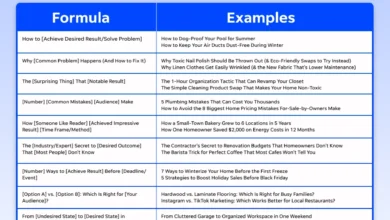
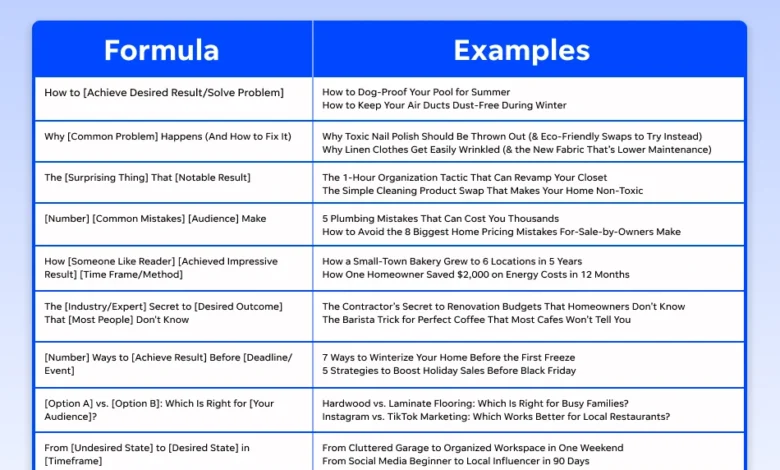
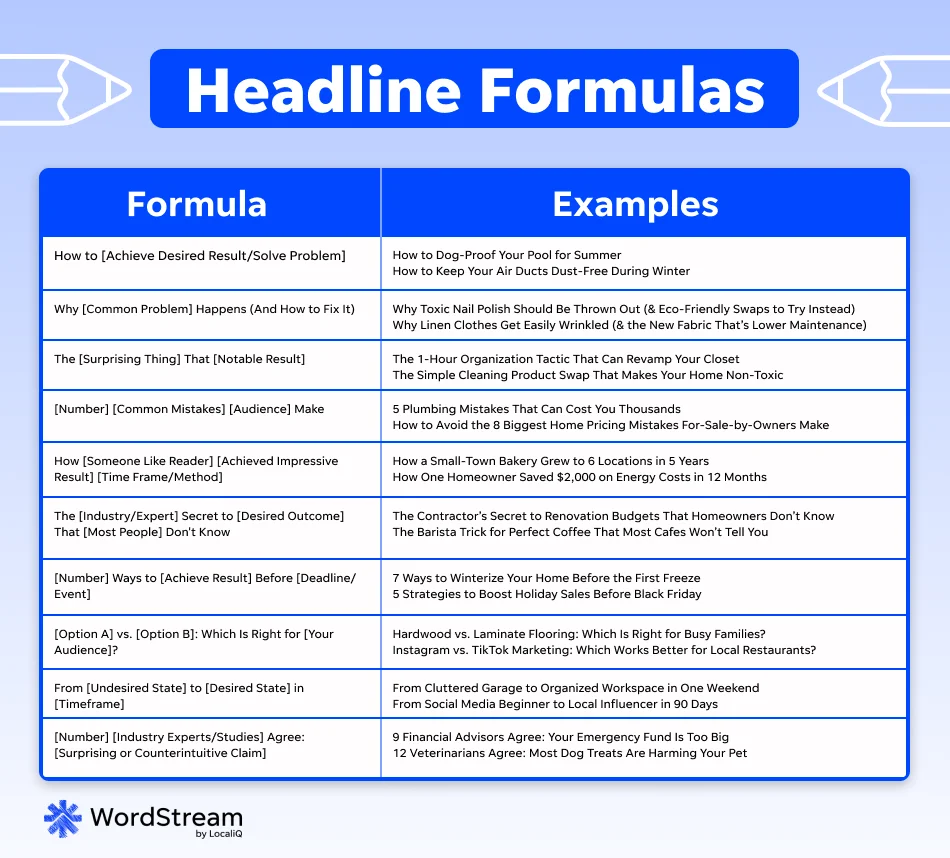
4. Interchangeable Headlines
A headline that could sit on a competitor’s website without requiring a single edit is a hallmark of automated output. AI pulls from the most common headline patterns found in its training data, resulting in titles that are grammatically correct but strategically invisible.

5. Absence of Concrete, Real-World Examples
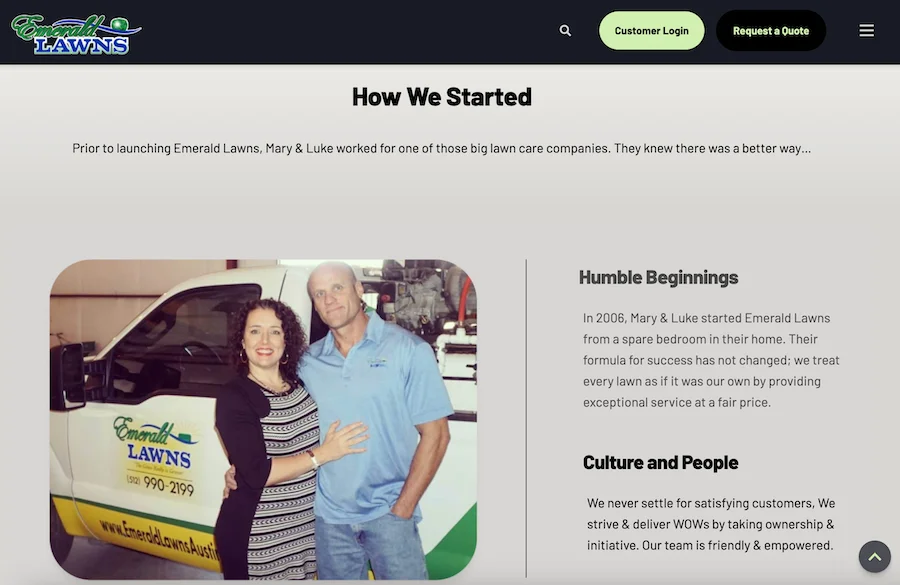
LLMs operate on abstraction. Providing a specific anecdote about a client in a particular city facing a unique challenge requires "grounded" knowledge that AI lacks unless specifically prompted with proprietary data. A lack of anchors in reality makes the copy feel untethered and theoretical.
6. Lack of Value Hierarchy
AI tends to give equal weight to every feature or benefit it lists. Human experts know that 80% of a product’s value usually comes from 20% of its features. When everything is presented as "essential," nothing feels truly important to the reader.
7. Circular Paraphrasing and Redundancy
To hit word counts or ensure "completeness," AI often repeats the same core idea using slightly different vocabulary. This creates a "filler" effect where the reader spends time consuming words that do not advance their understanding of the topic.
8. The Absence of Intellectual Tension
Compelling writing often involves a "pivot"—acknowledging a common belief and then challenging it. AI is programmed to be helpful and agreeable, which often strips away the healthy tension or "contrarianism" that defines thought leadership.
9. Vague and Friction-Heavy Calls to Action (CTAs)
"Learn more" or "Click here" are the defaults of the automated world. High-converting, human-written CTAs explain exactly what happens next (e.g., "Get your 15-minute SEO audit"). AI-generated prompts often lack this specific "next-step" clarity.
10. Avoidance of Hard Data and Timelines
Specifics require source grounding. AI often avoids citing specific years, percentages, or dollar amounts to minimize the risk of "hallucination" (generating false information). This results in a "safe" but unpersuasive vacuum of data.

11. Over-Reliance on Industry Clichés
Phrases like "in today’s fast-paced digital landscape" or "unlocking your potential" are over-represented in AI training sets. While humans use clichés too, AI uses them as the structural foundation of the writing, leading to a "hollow" reading experience.
12. Elaborate Over-Explaining of Simple Concepts
AI often treats the reader as if they have no baseline knowledge, meticulously defining basic terms. This "encyclopedic" tone can be patronizing to professional audiences who are looking for advanced insights rather than a glossary of terms.
13. Opaque Decision-Making Processes
A human writer can explain why they reached a conclusion, citing a specific trial-and-error process. AI provides the conclusion as a finished product, omitting the "reasoning" that allows a reader to trust the final result.

14. A Lack of Distinctive Point-of-View
Ultimately, AI-generated content feels like it could have been written by anyone. It lacks "voice"—the unique combination of experience, bias, and personality that makes a brand or an author recognizable.
Supporting Data: The Quantitative Cost of Genericism
The shift toward "information gain" is now a measurable SEO and conversion factor. Data from recent marketing audits suggests that content with "high information gain"—meaning it provides new, non-obvious information not found in other top-ranking results—sees a 40% higher retention rate than synthesized summaries.
Furthermore, the 2024 Edelman Trust Barometer highlights a growing skepticism toward AI in corporate communications. Nearly 60% of respondents expressed concern that AI-generated content makes it harder to distinguish truth from fiction. This sentiment is forcing a "flight to quality," where users are returning to trusted mastheads and recognized experts over anonymous, "optimized" blog posts.

Official Responses and Industry Shifts
The marketing industry’s leading voices are responding to this "sea of sameness" by advocating for a "Human-in-the-Loop" (HITL) framework. Search engine giants like Google have clarified their stance: they do not penalize AI content per se, but they do penalize "unhelpful" content that lacks E-E-A-T (Experience, Expertise, Authoritativeness, and Trustworthiness).
In response, many agencies are shifting their budgets. Instead of high-volume, low-cost content mills, firms are investing in "original research" and "first-person storytelling." The goal is to produce content that is "uncopyable"—incorporating proprietary data, internal case studies, and unique expert interviews that an AI cannot replicate through mere pattern recognition.
Broader Impact and Strategic Implications
The long-term implication of the AI content surge is the creation of a "Human Premium." As automated text becomes the baseline, content that exhibits genuine human judgment, humor, and specific expertise will command higher attention and value.

For businesses, the path forward involves a rigorous audit of their digital presence. This includes:
- The "Uncopyable" Test: Could a competitor put their logo on this article and have it still make sense? If yes, the content needs more specificity.
- The Data Anchor: Every piece of content should ideally include one piece of data or one anecdote that does not exist elsewhere on the internet.
- The Friction Audit: Are the CTAs specific enough to reduce user anxiety about what happens after the click?
The rise of AI has not changed the fundamental goal of marketing—to build a bridge of trust between a provider and a consumer. It has merely raised the stakes. By identifying and eliminating the red flags of automation, brands can ensure they remain on the human side of the digital divide, fostering the kind of trust that no algorithm can synthesize.