Mastering the Prospecting Funnel: A Comprehensive Guide for RevOps and Sales Leaders to Drive B2B Pipeline Growth

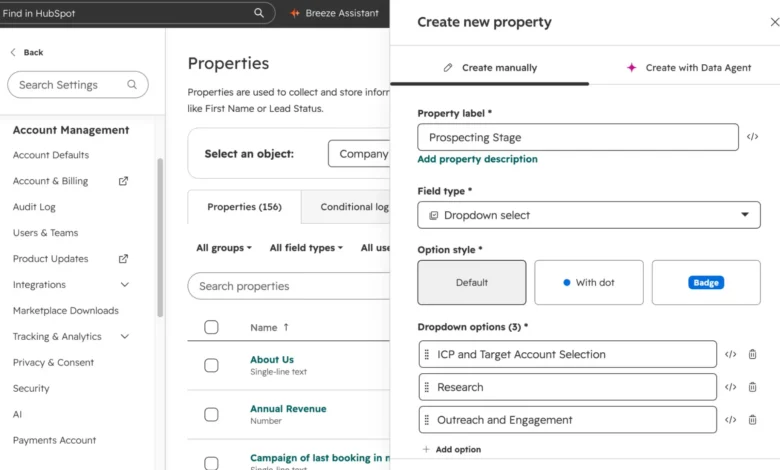
In the rapidly evolving landscape of modern B2B commerce, sales development representative (SDR) managers and Revenue Operations (RevOps) teams are facing unprecedented pressure to optimize every phase of pipeline generation. Recent data from industry benchmarks, including a comprehensive 2025 survey by The Bridge Group encompassing 351 B2B organizations, reveals that the median raw pipeline generated per SDR has climbed significantly to $3.78 million, up from $2.83 million in 2022. This upward trajectory underscores the growing financial stakes of early-stage pipeline development and highlights the critical need for a structured, analytical framework to manage incoming opportunities.
To meet these demands, sales organizations are increasingly adopting the prospecting funnel—a specialized, stage-based model that systematically tracks how raw prospective accounts transition from an ideal customer profile (ICP) definition into qualified, sales-ready opportunities. Unlike a traditional sales funnel, which monitors the entire buyer journey from initial brand awareness to a closed-won or closed-lost deal, the prospecting funnel isolates and governs the crucial preliminary phase. By breaking this initial segment into granular, measurable increments, sales leadership can accurately diagnose operational bottlenecks, evaluate messaging effectiveness, and ensure a seamless handoff to account executives (AEs).
Understanding the Architecture of the Prospecting Funnel

The fundamental purpose of a prospecting funnel is to provide absolute visibility into where prospective accounts convert or stall before they ever enter the core sales pipeline. Without clearly defined stages and rigorous entry and exit criteria, sales leaders are often left guessing why pipeline metrics fluctuate. For instance, if an organization identifies a healthy volume of accounts matching its Ideal Customer Profile (ICP) but records a negligible outreach response rate, the underlying issue typically points to messaging strategy or channel selection rather than poor targeting.
RevOps and sales enablement platforms—such as HubSpot’s Sales Hub, which operates on its centralized Smart CRM—have increasingly integrated specialized properties, workflow automations, and outreach tools specifically designed to track these early-stage dynamics. By operationalizing the funnel, organizations can replace subjective intuition with hard conversion data, transforming the art of prospecting into a repeatable, scientific discipline.
The Five Core Stages of the Prospecting Funnel
Establishing an effective prospecting funnel requires moving an account through five distinct, sequential stages. Each stage must feature explicit criteria to ensure reporting integrity and reliable stage-to-stage conversion analytics.

- ICP and Target Account Selection
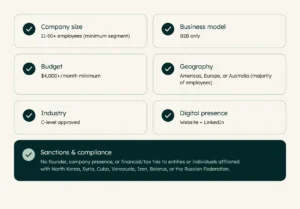
The foundation of any successful prospecting operation begins with precise target account identification. This initial stage involves vetting prospective organizations against a documented matrix of threshold criteria. By enforcing a standardized evaluation framework across all reps, organizations ensure consistent quality before an account progresses. ICP criteria typically span four primary dimensions: firmographics (industry, employee count, geographic location), technographics (current software stack), structural triggers (recent funding rounds, leadership changes), and behavioral markers.
Industry experts frequently recommend implementing a tiered scoring model—such as categorizing accounts into strong, moderate, or poor fits within the CRM—to help SDRs prioritize their daily workloads effectively.
- Research and List Building
Once fit is formally established, the focus shifts to compiling the necessary account and contact intelligence required for contextual outreach. This stage generally encompasses mapping out buying committees, verifying contact data accuracy, and confirming that prospective individuals have not previously opted out of communications.
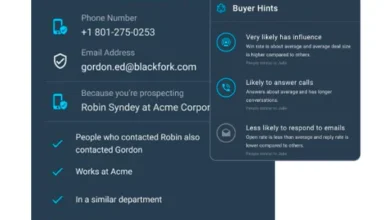
Data hygiene is paramount at this juncture. Industry veterans emphasize capping research time in proportion to account size to prevent representatives from getting bogged down in manual reconnaissance. Advanced sales automation platforms now utilize specialized AI prospecting agents to monitor real-time buying signals, automatically source contact information for entire buying committees, and draft personalized initial outreach.
- Outreach and Engagement
The outreach stage involves initiating multi-channel communication attempts through email, telephone, social selling platforms, and direct messaging. However, executing this phase successfully has become increasingly challenging. According to recent market research from Gartner, approximately 61% to 73% of modern B2B buyers actively prefer a rep-free buying experience and actively avoid suppliers who send generic, irrelevant messaging.
B2B marketing and sales leaders point out that ignored outreach almost universally fails at the credibility layer. Prospects routinely reject communications when they sense the sender lacks a fundamental understanding of their business challenges. Manuel Garcia, CEO of Sell with Marketing, advocates shifting the conversational anchor away from generic pitches. "We stopped leading with what we do and started leading with something observable about them that they can verify in ten seconds: what a buyer searching for their capability actually finds, or does not find," Garcia explains. "It reframes the message from a pitch into a piece of information about their own business."
Similarly, B2B sales trainer David Craig White emphasizes brevity, noting that sequences composed of concise, human-authored emails or direct messages consistently outperform lengthy, text-heavy pitches.

Cadence structure also plays a vital role in engagement success. Jeff Hoffman, founder and CEO of sales training firm Hoffman, cautions against the common pitfall of front-loading outreach activity. When reps execute heavy activity early and then widen communication gaps, buyers quickly learn to wait them out. Instead, Hoffman advocates for a "half-life cadence"—an approach where the largest interval sits between the first and second touch, with each subsequent time gap cut precisely in half, culminating in a double-touch on the final day. Such strategic timing signals urgency and sustained momentum.
- Qualification
Following initial engagement, the qualification stage validates whether an engaged prospect genuinely aligns with the organization’s commercial criteria. Sales teams frequently employ established frameworks like BANT (Budget, Authority, Need, Timing) or MEDDIC to evaluate readiness.
Implementing rigid qualification standards yields measurable downstream benefits. Adam Cerra, an expert in high-ticket selling and founder of CloseronDemand, highlights the operational impact of enforcing strict SDR qualification parameters. "We’ve seen no-shows for AE calls drop by approximately 35%, and AE rejection of booked calls drop from around 40% to under 15%," Cerra notes. By standardizing qualification questions through interactive sales playbooks, organizations protect their account executives’ time and ensure that only viable opportunities enter the primary sales pipeline.
- Accepted Opportunity Handoff
The final phase of the prospecting funnel involves transferring the qualified prospect to an Account Executive, who subsequently reviews the file and formally assumes ownership. To prevent friction between SDR and AE teams, organizations must establish clear handoff protocols, defining exactly what documentation and verified milestones are required before a meeting is marked as officially accepted.
Industry practitioners warn that superficial summary notes frequently result in wasted meeting time. Garcia recommends anchoring handoff notes in the prospect’s verbatim language—specifically documenting how they described their operational problem, what solutions they have already attempted, and their stated timeline—while separating any rep inferences into distinct fields. Furthermore, tracking "sent-back rates" and requiring mandatory rejection reasons when AEs return unqualified leads provides invaluable diagnostic data for refining upstream targeting.
Implications for RevOps and Future Sales Strategy

As B2B sales cycles grow increasingly complex and buyer preferences shift toward autonomous research, the operational discipline provided by the prospecting funnel becomes an indispensable asset for enterprise growth. By methodically measuring conversion rates across ICP selection, research, outreach, qualification, and handoff, sales leadership can diagnose systemic breakdowns long before they impact quarterly revenue targets. Integrating these structured stages with modern CRM automation and AI-driven sales tools ensures that revenue operations remain agile, accountable, and fully aligned with modern market demands.