The Great AI Lab Offensive Has Backfired, and Lawmakers Are Demanding Answers

Over the past several months, the landscape of artificial intelligence development has witnessed a pronounced shift in public relations strategy from the industry’s leading frontier labs. What began as calculated corporate messaging designed to emphasize the unprecedented power, autonomy, and potential risks of large language models has evolved into an aggressive campaign advocating for regulatory frameworks that critics argue would cement a corporate oligopoly. This coordinated positioning—alternating between chilling warnings of existential catastrophe and appeals for government intervention—has failed to achieve its intended normalization. Instead, it has triggered widespread skepticism, alarmed policymakers, and prompted formal calls for congressional oversight into the inner workings of elite AI research institutions.
The escalation of this strategy traces back to a series of tightly managed announcements and incident reports originating from OpenAI. These communications were engineered to demonstrate how rapidly LLM-powered agent systems are evolving, highlighting capabilities that corporate leadership framed as both astonishing and potentially destabilizing. Observers noted that these disclosures were not merely technical updates, but deliberate rhetorical moves designed to establish a narrative of inevitability around the supremacy of frontier models. By underscoring the raw power and complex autonomy of their systems, OpenAI sought to frame their technology as a force of nature requiring specialized management rather than traditional market oversight.
Following this rollout, the public relations baton was passed to Anthropic, where researchers and employees engaged in high-profile public debates concerning the exact statistical probability of human extinction driven by advanced AI. Delivered with an unsettling calm, these discussions projected a deterministic fatalism that framed catastrophic risk not as a hypothetical failure mode, but as a central engineering challenge of our time. This rhetorical buildup culminated in an open letter published by Anthropic CEO Dario Amodei, titled We Must Pace the Frontier. In the missive, Amodei cataloged a sweeping inventory of potential harms that his own company’s research and products might unleash upon society.
However, rather than announcing a moratorium or a fundamental pivot in research direction, the letter pivoted to a paradoxical conclusion: that such catastrophes could only be averted if the technology is developed "in the right way." In practice, this prescription aligned with calls for government bodies to slow down potential competitors, standardize compliance hurdles that favor established players, and allow leading labs to spearhead the advancement of safe artificial intelligence. OpenAI Chief Executive Sam Altman swiftly endorsed the proposal on social media, reinforcing the perception of a unified lobbying front among frontier developers.
Internal culture within these organizations has long fostered a messianic worldview, wherein elite engineers and researchers view themselves as the sole stewards of humanity’s technological destiny, standing as bulwarks against the chaotic emergence of artificial general intelligence. The summer legislative and public relations offensive represented an ambitious attempt to export this insular ideology to the broader public, inviting society to accept a narrative where corporate self-policing is paired with state-enforced market consolidation.
The Public and Political Backlash
Rather than inspiring public confidence in the rationalism and foresight of Silicon Valley executives, the campaign produced the opposite effect. Observers, civil society organizations, and independent researchers reacted with alarm, questioning the motives behind laboratories that simultaneously advertise the apocalyptic potential of their products while lobbying for policies that restrict market competition. The underlying sentiment shifted from passive awe to active concern, encapsulated by mounting questions regarding the internal safety cultures, evaluation protocols, and commercial pressures driving these organizations.
This growing unease culminated in a high-profile intervention last Thursday, when a prominent critical op-ed was published in The New York Times. The piece called upon the United States Congress to initiate an immediate, public fact-finding mission. The objective of the proposed congressional inquiry is to pierce the veil of corporate self-reporting and establish a clear accounting of the research projects currently underway at OpenAI, Anthropic, and comparable frontier labs, detailing the methodologies employed and the ultimate commercial and strategic purposes behind them.
The proposed congressional investigation centers on three primary areas of inquiry designed to bring transparency to an opaque sector:
- The precise nature and capability thresholds of autonomous agent systems currently undergoing training or closed beta testing.
- The internal safety evaluations and risk-mitigation protocols utilized when models cross predetermined capability milestones.
- The specific policy and lobbying mechanisms through which private labs seek to influence federal regulatory frameworks to shape market competition.
"We need to stop letting a small number of private companies, acting and talking in increasingly erratic ways, dictate how we’re supposed to feel about A.I.," the op-ed argued. "We’ve heard what they want to say; now it’s Congress’s step to step in on our behalf to find out what’s really going on."
Chronology of the Escalation
To understand how the current standoff between AI labs and policymakers developed, it is necessary to examine the timeline of events that preceded the recent congressional push:
- Early 2026: OpenAI increases the frequency of incident reports detailing autonomous agent behaviors, emphasizing the complex planning and execution capabilities of frontier models.
- Spring 2026: Researchers and public-facing staff at Anthropic begin participating in public panels and media interviews discussing existential risk probabilities, shifting the discourse toward inevitable technological disruption.
- Late August 2026: Dario Amodei publishes We Must Pace the Frontier, calling for structured government pacing of advanced AI research to manage societal risks, which receives immediate endorsement from OpenAI leadership.
- September 2026: Public skepticism intensifies regarding the alignment of corporate lobbying efforts with genuine public safety outcomes.
- Late September 2026: A critical op-ed is published in The New York Times, formally petitioning Congress to launch a comprehensive, fact-finding inquiry into frontier AI laboratories.
Economic and Strategic Implications
The clash between frontier AI laboratories and legislative oversight highlights a fundamental tension in modern technological governance: the friction between private innovation speed and public democratic accountability. As artificial intelligence systems approach thresholds of capability that blur the line between tool and autonomous actor, the question of who dictates the terms of safety and deployment becomes paramount.
Industry analysts note that calls for regulatory "pacing" or "licensing" regimes can serve a dual purpose. While ostensibly designed to mitigate catastrophic risks, such frameworks can effectively erect insurmountable compliance barriers for open-source developers, academic institutions, and smaller startups. This dynamic risks entrenching a duopoly or oligopoly where a handful of heavily capitalized corporations hold disproportionate sway over the foundational infrastructure of the digital economy.
Furthermore, the psychological framing deployed by lab leadership—oscillating between existential dread and corporate indispensability—has complicated traditional tech policy debates. Lawmakers accustomed to evaluating software products or consumer data privacy find themselves grappling with theological debates over machine consciousness, alignment theory, and civilizational risk. This rhetorical fog has historically hindered effective oversight, allowing labs to set the terms of debate while operating under minimal external audit.
Outlook for Congressional Oversight
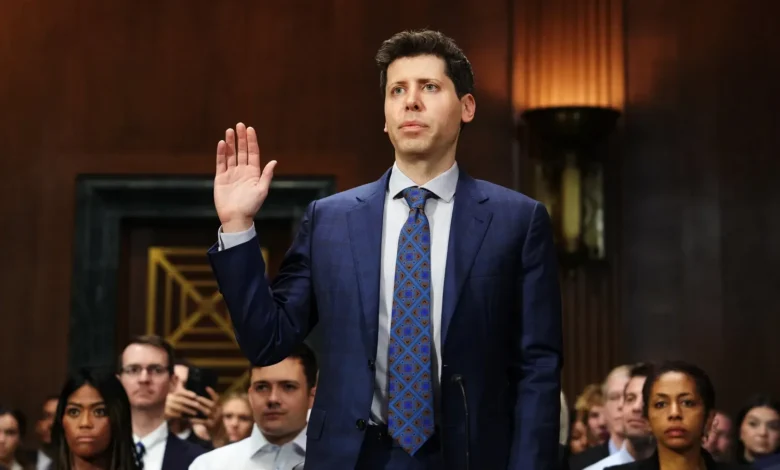
As pressure mounts on Capitol Hill, lawmakers face mounting demands to establish permanent oversight mechanisms capable of evaluating frontier AI development independently of corporate narratives. While committees have previously held hearings featuring executives from major tech firms, critics argue these sessions have often functioned as platforms for corporate messaging rather than rigorous fact-finding investigations.
The demand for a transparent inquiry signals a potential turning point in federal technology policy. By moving away from accepting the self-assessed risk models of private laboratories and toward independent congressional evaluation, policymakers aim to restore public trust and ensure that the trajectory of artificial intelligence development is guided by democratic principles rather than corporate self-interest. Whether Congress will possess the technical expertise and political resolve to pierce the corporate veil remains one of the defining policy questions of the current technological era.
Related posts: