Slack Code API democratizes agentic development by bringing AI collaboration into the enterprise workspace

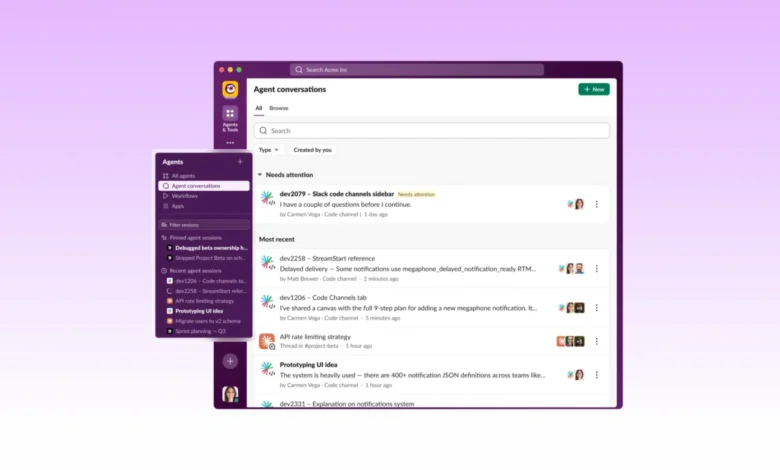
In an era where artificial intelligence is rapidly transitioning from a tool of individual productivity to a pillar of collaborative workflows, Slack has officially moved to standardize how AI agents interact with engineering teams. Following the August launch of Slack Code, which introduced a dedicated environment for "multiplayer" AI development, the company has announced the general availability of the Slack Code API. This release marks a significant departure from the siloed, "single-player" experience that has defined early AI coding assistants, enabling developers to build, deploy, and manage intelligent agents directly within the Slack interface.
The Evolution of Agentic Collaboration
The concept of "agentic development" refers to the shift toward autonomous or semi-autonomous AI systems capable of executing complex, multi-step tasks such as debugging, refactoring, and code deployment. Historically, these interactions were confined to private, isolated sessions—often within an IDE or a hidden browser tab—leaving human collaborators in the dark until the final output was presented.
Slack’s initiative seeks to address this friction by turning the communication hub into a shared workspace for both human and machine. By providing a dedicated space for agents to operate, Slack allows for real-time observability, human-in-the-loop interventions, and collective decision-making. The company’s internal data suggests this model is highly effective; GitHub Copilot, a launch partner for the initiative, utilizes these dedicated code channels in approximately 30% of its total agent sessions. This statistic highlights a growing industry preference for collaborative AI workspaces over isolated task execution.
Chronology of the Slack Code Ecosystem
The trajectory toward today’s general availability began in August with the initial rollout of Slack Code. At that time, the experience was exclusive to a select group of major industry players, including Anthropic, Cognition, GitHub, and Vercel. These partners served as the initial test bed for the concept, refining the user experience and testing the technical architecture required to manage complex agent-human handoffs.
The demand from the developer community was immediate. Slack reported that over 150 enterprise customers and independent developers requested access to the internal tools used by these launch partners. The realization that the market required a standardized framework—rather than bespoke, fragmented solutions—pushed Slack to prioritize the development of a public-facing API. By October, the company finalized the API architecture, ensuring that it could handle the heavy lifting of UI rendering, such as code diffs, HTML previews, and structured thinking steps, effectively reducing the development burden on external teams.
Bridging the Technical Gap
One of the primary challenges in integrating AI agents into team workflows has been the limitations of standard communication tools. Traditional messaging threads are ill-equipped to handle the artifacts of a modern software development lifecycle: large log files, complex code diffs, multi-step execution plans, and real-time status updates. Previous attempts to integrate these elements often resulted in cluttered, unreadable threads that frustrated users and complicated security oversight.
The Slack Code API addresses these issues by providing a structured, purpose-built interface. Developers can now utilize the API to define how their agents present information. Because Slack manages the interface layer, developers are freed from building custom UI components. Instead, they can focus on the logic and efficacy of the agent itself. This "agent-neutral" approach ensures that organizations can swap out underlying models or vendors as the technology evolves, without needing to overhaul their internal workflow integrations.
Security and Governance in the Age of AI
A central concern for enterprise IT leaders has been the risk associated with "shadow AI"—the uncontrolled deployment of third-party agents that may not comply with organizational security policies. The Slack Code API is designed to integrate natively with existing governance frameworks.
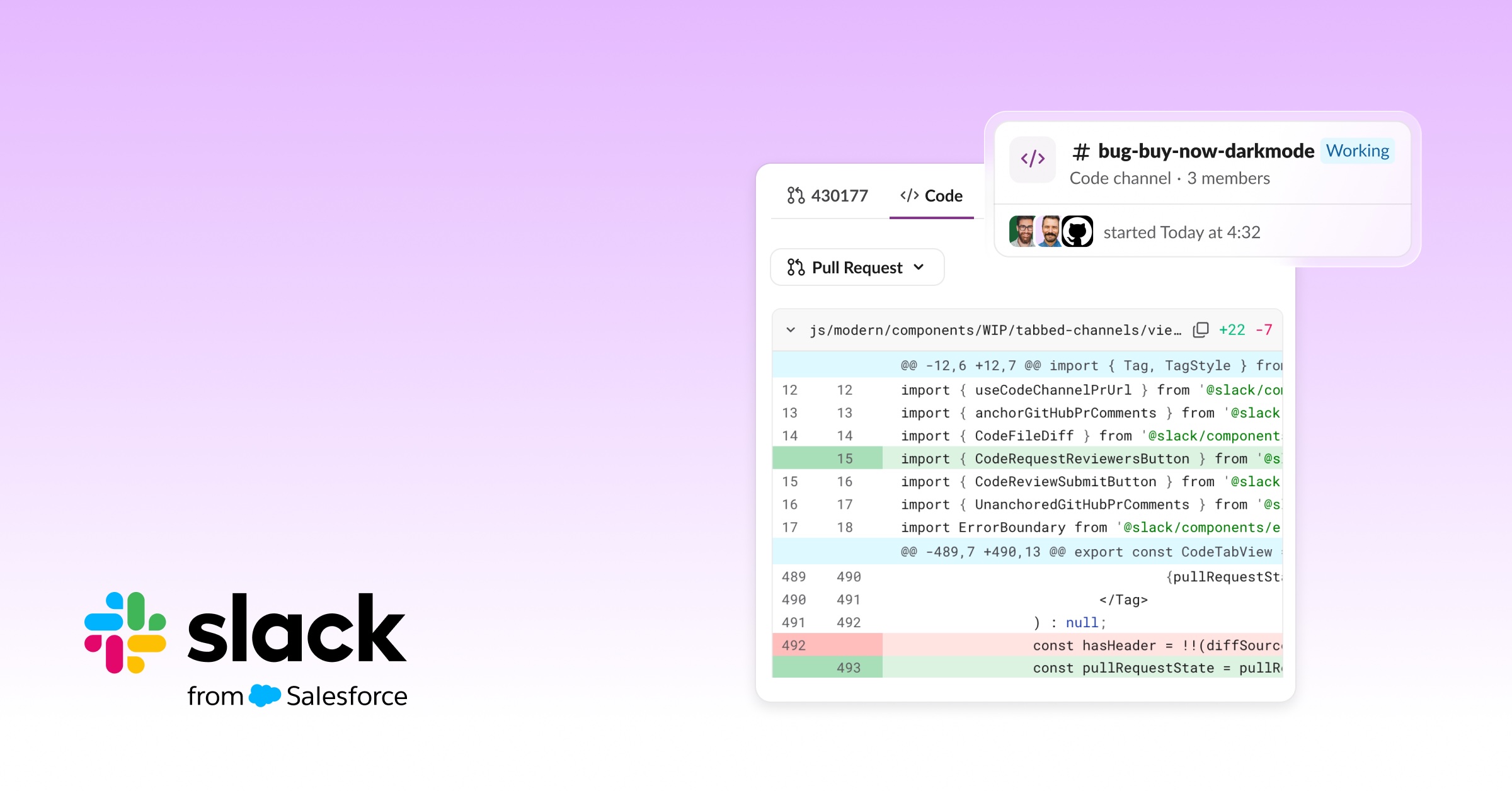
Because every code channel created by an agent inherits the permissions and administrative controls of the parent channel, there is no need for IT teams to build separate, siloed access models. This ensures that:
- Visibility: High-stakes changes are logged and searchable, providing a clear audit trail for compliance purposes.
- Human Oversight: The system mandates that a human must review and approve significant changes, preventing agents from acting in a vacuum.
- Persistence: Once the task is complete and the channel is archived, the record of the interaction remains as institutional knowledge, rather than disappearing into a private session log.
This architecture solves a critical "last-mile" problem for CTOs and CIOs who want to leverage AI efficiency without sacrificing security and accountability. By keeping the work in the open, the enterprise ensures that the agent is always subject to the same oversight as a human employee.
Transforming the DevOps Lifecycle
The implications for DevOps and incident management are profound. In a hypothetical scenario involving a 2:00 a.m. production alert, an observability agent can now initiate a code channel, aggregate logs, and propose a hotfix. An on-call engineer, notified through Slack, can enter the channel, monitor the agent’s reasoning, and intervene if the agent misidentifies the service.
This model effectively democratizes the knowledge gained during incident response. Rather than a single engineer working in a silo, the entire team can observe the agent’s progress, contribute domain-specific context, and sign off on the final deployment.
The upcoming integration with Pull Request (PR) workflows is expected to further solidify this transition. By allowing users to request reviews, sync comments bi-directionally with GitHub, and merge PRs directly from the Slack channel, the platform is aiming to eliminate the context-switching that typically plagues engineering teams.
Industry Implications and Future Outlook
The shift toward "multiplayer" AI represents a fundamental change in how software is constructed. Analysts note that as agentic capabilities grow, the primary bottleneck will no longer be the speed of code generation, but the speed of alignment between human intent and machine execution. By providing a persistent, searchable, and collaborative environment, Slack is positioning itself as the "operating system" for this human-AI collaboration.
The decision to make the Slack Code API generally available is a clear signal that the company views agentic development as a mature enough technology to move beyond the experimental phase. For developers, this means the barrier to entry has been significantly lowered; they can now ship their agents into the environments where users already spend their working hours.
As organizations prepare for the next generation of AI tools, the focus is shifting toward integration and ergonomics. The "BYOA" (Bring Your Own Agent) era in Slack is not just about bringing more tools into the workplace; it is about establishing a common language for how those tools interact with human teams. By standardizing the interface, Slack is betting that the most successful AI agents will not be the ones that work the fastest, but the ones that communicate the best with their human counterparts.
With the API now available across all Slack plans, the stage is set for a new wave of development. Whether it is a bespoke internal tool for enterprise infrastructure management or a commercially available agent on the Slack Marketplace, the expectation is that these agents will operate with a level of transparency and collaborative utility that was previously unattainable. As the industry watches, the success of this initiative will likely be measured by how seamlessly these agents integrate into the day-to-day rhythms of high-performing engineering teams, ultimately turning the once-solitary act of coding into a truly collective, enterprise-grade endeavor.