The Best Times to Post on Instagram in 2026 Based on Comprehensive Social Media Engagement Data

Strategic timing has emerged as a cornerstone of digital marketing, according to a massive new analysis of social media trends. Buffer’s "State of Social Engagement 2026" report, which scrutinized 9.6 million Instagram posts, has identified Thursday at 9 a.m., Wednesday at 12 p.m., and Wednesday at 6 p.m. as the most effective windows for maximizing audience interaction. This data comes at a time when competition for organic reach on Meta-owned platforms has reached an all-time high, forcing creators and brands to move beyond content quality and into the realm of precision scheduling.
The findings are part of a broader cross-platform study that examined 52 million posts across ten different social networks between January 2024 and December 2025. By analyzing the behavior of over 200,000 accounts, researchers have provided a roadmap for 2026 that highlights a significant shift in how global audiences consume visual media.
The Data-Driven Foundation of Modern Engagement
The 2026 report marks a departure from previous years, emphasizing that the "best time to post" is no longer a static suggestion but a fluctuating target dictated by user fatigue and professional schedules. The study utilized median engagement rates rather than averages to ensure that "viral outliers"—posts from celebrities or massive brands—did not skew the results for small business owners and independent creators.
![Best Time to Post on Instagram: 2026 Data from 9.6M Posts [Updated July 2026]](https://storage.ghost.io/c/6d/21/6d217297-aa70-41fe-b68d-e29e411dd3ed/content/images/2026/01/best-time-to-post-on-instagram-2026.png)
One of the most striking revelations in the data is the dominance of the midweek "engagement hump." While the early days of Instagram favored weekend posting when users had more leisure time, the 2026 landscape shows a distinct preference for Tuesday, Wednesday, and Thursday.
The Midweek Surge: Wednesday and Thursday
Wednesday has officially been crowned the highest-performing day of the week. The data suggests three distinct peaks: 8 a.m., 12 p.m., and 6 p.m. This "triple-peak" phenomenon aligns with the daily routines of the platform’s largest demographic—users aged 25 to 34. The noon spike, in particular, highlights the "lunch-break scroll," a period where professional users seek a brief mental escape from their workday.
Thursday presents a unique anomaly in the dataset. While most days see engagement climb in the late afternoon and evening, Thursday’s peak occurs at 9 a.m. Social media analysts suggest this is driven by "end-of-week planning energy," where users check in with brands and creators to map out their upcoming weekend activities or purchase goods for Friday delivery.
Chronology of the Study and Algorithmic Shifts
The two-year window of data collection (2024–2025) allowed researchers to track the platform’s transition toward a new algorithmic priority: "sends per reach." According to statements from the Head of Instagram, Adam Mosseri, the platform now prioritizes content that is shared via Direct Message (DM) over content that simply receives likes or comments.
![Best Time to Post on Instagram: 2026 Data from 9.6M Posts [Updated July 2026]](https://storage.ghost.io/c/6d/21/6d217297-aa70-41fe-b68d-e29e411dd3ed/content/images/2026/01/best-time-to-post-instagram-2026-heatmap.png)
This shift has profound implications for timing. If a post is shared when a user’s friends are also active, the likelihood of that post being sent in a DM increases exponentially. The 2026 data reflects this social loop, showing that evening hours between 6 p.m. and 11 p.m. are consistently the most reliable for building early momentum.
The Rise of the "Evening Window"
Except for the Thursday morning outlier, the data shows that 6 p.m. to 11 p.m. local time is the "golden window" for engagement. This timeframe coincides with the post-work wind-down period. For the 18-to-34 demographic, Instagram serves as a primary source of entertainment, rivaling traditional television and streaming services during prime-time hours.
Detailed Breakdown by Day of the Week
To provide a comprehensive strategy for 2026, the report breaks down the optimal windows for every day of the week, normalized for any local timezone:
- Monday: The strongest engagement occurs at 7 p.m., followed by 6 p.m. and 8 p.m. Audiences typically use Monday mornings to catch up on emails and work tasks, making evening posts the first real opportunity for recreational scrolling.
- Tuesday: Ranking as the third-strongest day overall, Tuesday peaks at 7 p.m., with secondary windows at 3 p.m. and 5 p.m.
- Wednesday: The "Gold Standard" day. Optimal times are 12 p.m., 6 p.m., and 8 a.m.
- Thursday: The morning-heavy day. Peaks at 9 a.m., 8 a.m., and 7 a.m.
- Friday: Engagement begins to crater as users shift to offline social activities. The only viable peak is late at night, around 10 p.m.
- Saturday: Historically a strong day, Saturday is now one of the weakest. Engagement is low across all slots, with a minor uptick at 9 p.m.
- Sunday: A recovery day. Audiences return to the app in the evening (9 p.m. to 10 p.m.) to prepare for the week ahead, creating a moderate engagement tier.
The Format Factor: Reels, Carousels, and Stories
The 2026 analysis notes that while general timing is crucial, the format of the post dictates how users interact with it.
![Best Time to Post on Instagram: 2026 Data from 9.6M Posts [Updated July 2026]](https://storage.ghost.io/c/6d/21/6d217297-aa70-41fe-b68d-e29e411dd3ed/content/images/2026/01/best-day-to-post-instagram-2026-.png)
Instagram Reels
Reels continue to be the primary engine for discovery. Because the algorithm prioritizes entertainment value for Reels, evening posting is essential. Users are more likely to watch a 30-second video with sound enabled when they are at home rather than in a professional or public setting. The "sends per reach" metric is most aggressive with Reels, making the 6 p.m. to 11 p.m. window critical for triggering the viral "DM loop."
Carousels
Carousels (multi-image posts) require more "dwell time" as users swipe through the slides. The data suggests these perform best during the Wednesday 12 p.m. lunch-break window. When users have five to ten minutes of downtime, they are more inclined to engage with educational or storytelling carousels.
Instagram Stories
Unlike feed posts, Stories are not as dependent on a specific hour. Instead, the report recommends a "frequency over timing" approach. Posting one to two Stories daily ensures a brand remains at the front of the user’s Story tray. Because Stories disappear after 24 hours, the goal is to maintain a consistent presence rather than hitting a single peak window.
Broader Impact and Market Implications
The precision of this data reflects a broader maturation of the social media marketing industry. As organic reach continues to decline, the margin for error has narrowed. For small business owners, these findings represent a "low-cost, high-reward" adjustment. Unlike paid advertising, which requires significant capital, adjusting a posting schedule only requires a change in workflow.
![Best Time to Post on Instagram: 2026 Data from 9.6M Posts [Updated July 2026]](https://storage.ghost.io/c/6d/21/6d217297-aa70-41fe-b68d-e29e411dd3ed/content/images/2026/05/image-6.png)
Furthermore, the normalization of the data—where 9 a.m. refers to 9 a.m. in the user’s local timezone—simplifies global operations. Whether a brand is based in New York, London, or Mumbai, the psychological triggers of the "lunch break" or the "evening wind-down" remain consistent across cultures.
Industry Reactions and Expert Analysis
Digital strategists have noted that the "death of the weekend post" is one of the most significant takeaways for 2026. "We are seeing a clear boundary being drawn by users," says one social media analyst. "On Fridays and Saturdays, people are prioritizing ‘real-world’ experiences. Trying to fight for attention during those times is often a losing battle. The smart move is to save your high-production content for Wednesday."
The "Thursday 9 a.m. Anomaly" is also being viewed as a major strategic opportunity. Brands that specialize in lifestyle, travel, or weekend-related services can capitalize on this specific window of "planning energy" to capture users right as they begin thinking about their Friday and Saturday plans.
Conclusion: A Checklist for 2026 Success
Based on the 9.6 million posts analyzed, a successful Instagram strategy in 2026 requires more than just a creative eye. It requires a logistical commitment to the following:
![Best Time to Post on Instagram: 2026 Data from 9.6M Posts [Updated July 2026]](https://storage.ghost.io/c/6d/21/6d217297-aa70-41fe-b68d-e29e411dd3ed/content/images/2026/05/image-7.png)
- Midweek Prioritization: Focus the majority of content production on Tuesday through Thursday.
- Evening Dominance: Schedule Reels and high-stakes announcements for the 6 p.m. to 11 p.m. window to maximize DM shares.
- Weekend Rest: Avoid posting high-effort content on Fridays and Saturdays; use these days for lightweight Stories or community engagement.
- Algorithmic Alignment: Create content specifically designed to be sent to others, as "sends per reach" is now the primary signal for the Instagram algorithm.
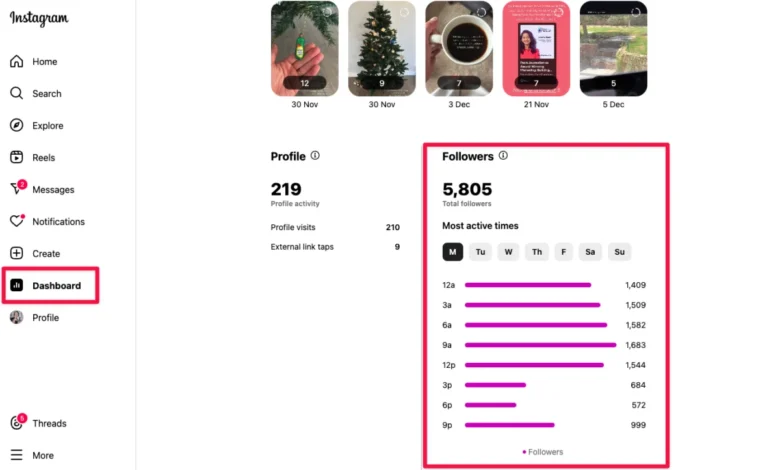
- Local Context: Use in-app insights to see if your specific audience deviates from these global medians, as niche communities (such as night-shift workers or specific hobbyists) may have unique patterns.
As Instagram continues to evolve from a photo-sharing app into a comprehensive entertainment and communication hub, timing will remain one of the few variables creators can control. By aligning with the 2026 data, brands can ensure their content lands in front of an active, engaged, and "ready-to-share" audience.