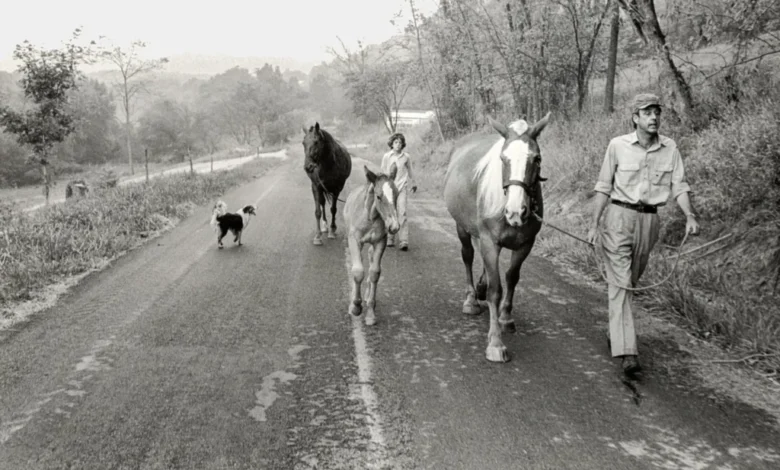
The passing of Wendell Berry at his Port Royal, Kentucky home at the age of 92 marks the end of a singular literary and agrarian voice that spent over half a century challenging the trajectories of modern industrial society. Berry, who cultivated his land using traditional, draft-animal techniques and composed his essays and poetry by hand in a remote cabin devoid of electricity, leaves behind a profound intellectual legacy. While celebrated primarily for his fierce critiques of industrial agriculture, corporate consolidation, and environmental degradation, his life’s work transcends the boundaries of farming and regional literature. For contemporary observers who lack direct ties to agrarian life or the means to retreat to a rural enclave, Berry’s trajectory offers a compelling blueprint for intentional living, deliberate vocation, and resistance against the frictionless convenience of the twenty-first-century digital economy.
The Chronology of a Scholar Turned Agrarian
Berry’s path to the hills of Henry County, Kentucky, was neither direct nor provincial; it was preceded by the pursuit of conventional academic and literary prestige. Born in 1935, Berry pursued his undergraduate and master’s degrees at the University of Kentucky before venturing west to Stanford University to study creative writing under the tutelage of prominent literary figures. His early trajectory was augmented by a prestigious Guggenheim Fellowship, which afforded him the opportunity to live and write in Italy and France during the early 1960s.
Upon returning to the United States, Berry secured an academic post as an assistant professor of English at New York University’s Bronx campus. By all standard metrics of the mid-twentieth-century American literary establishment, Berry had arrived. He was a published author, a married father of two, and a rising academic holding a secure position within the epicenter of the nation’s cultural elite.
Yet, beneath the veneer of professional success, a fundamental philosophical friction persisted. In 1964, at the age of 29, Berry made the radical decision to relinquish his academic appointment at NYU and return permanently to the landscape of his ancestors in Henry County, Kentucky. This pivot stunned his academic superiors. Upon submitting his formal resignation, Berry was summoned to a senior administrator’s office—a meeting later documented by contemporary essayists and biographers. The supervisor, operating from the conventional assumption that professional prestige and metropolitan proximity were the ultimate goods, warned the young writer that he was sacrificing a promising career for obscurity. Invoking Thomas Wolfe’s famous dictum that "you can’t go home again," the administration made a final, unsuccessful appeal to dissuade him. Berry, however, remained unmoved, convinced that true literary and moral authority required an intimate, unyielding relationship with a specific place and community.
Rooted Observation and the Critique of Modern Abstraction
In subsequent interviews and decades of essay writing, Berry articulated the rationale behind his geographical and vocational retreat. He maintained that artistic integrity regarding human relationships with the land could not be sustained from a distance or fabricated amid the cocktail parties of metropolitan literary circles. In a 2018 interview with the New York Service of record, Berry reflected on his decision, noting that the local landscape and the diverse rural populace served as an essential corrective check on his ideas. By engaging directly with neighbors across various walks of life, Berry anchored his philosophy in practical, lived reality rather than abstract theory.
This commitment to physical proximity and tangible labor formed the bedrock of his extensive bibliography, which spans novels, short stories, poetry, and foundational essays such as The Unsettling of America: Culture & Agriculture (1977). In these works, Berry argued that industrial agriculture detached human survival from ecological stewardship, transforming food from a localized gift of the earth into a fungible commodity produced by distant corporations and sustained by petrochemical inputs. He extended this critique to modern economic structures more broadly, warning that the relentless pursuit of efficiency and technological mediation would ultimately alienate human beings from their communities, their labor, and their physical environments.
Socio-Cultural Implications in the Digital Age
Berry’s warnings regarding the dangers of abstraction and technological mediation resonate with acute relevance in the contemporary landscape. Modern professional life is increasingly dominated by digital virtualization—characterized by continuous streams of notifications, asynchronous messaging platforms, virtual conferencing, and the delegation of cognitive tasks to artificial intelligence systems. Rather than liberating workers from toil, these technologies have frequently engendered a culture of digital presenteeism and superficial productivity, marked by what sociologists term administrative "theater."
Concurrently, contemporary political discourse has largely migrated to algorithmic social media ecosystems, where complex socioeconomic structural issues are reduced to polarized, performative tribalism. This digital environment encourages a sense of passive spectatorship and cognitive numbness, offering frictionless conveniences designed to insulate individuals from discomfort, friction, and deep engagement.
Berry’s life and philosophy directly challenge this paradigm. Rather than viewing difficulty, physical labor, and cognitive strain as conditions to be eradicated by technological innovation, Berry posited that deliberate, sustained engagement with real-world challenges is essential to human flourishing. By choosing the hard, unglamorous path of fidelity to a specific place, a marriage, a vocation, and a community, Berry demonstrated that meaning is not downloaded or curated, but built through persistent, tangible effort.
Reactions and Legacy
Following the announcement of his passing, tributes poured in from literary figures, environmentalists, agricultural advocates, and cultural commentators across the political spectrum. Colleagues and admirers noted that Berry’s influence extends far beyond the agricultural sector, serving as an intellectual anchor for the "slow living" movement, localism, and critiques of hyper-globalized supply chains.
Agricultural economists and rural sociologists point out that Berry’s foundational arguments regarding the fragility of centralized systems have been validated by subsequent supply chain vulnerabilities and ecological crises. His insistence on agrarian stewardship anticipated modern conversations surrounding regenerative agriculture, soil health, and sustainable local economies.
Furthermore, cultural critics emphasize that Berry’s enduring legacy lies in his model of intellectual independence. In an era dominated by personal branding, digital metrics, and institutional conformity, Berry’s 1964 retreat to Henry County stands as a permanent counter-narrative—a reminder that an individual can deliberately step outside dominant cultural imperatives to construct a life of genuine depth, purpose, and local responsibility. As contemporary society navigates the compounding complexities of automation, digital alienation, and ecological anxiety, Wendell Berry’s life’s work remains an enduring touchstone, inviting subsequent generations to reconsider what it means to live deliberately on the earth.